Beyond the glass
Discover Attica
Let the landscape
lead the way.
A cultural compass
City. Countryside.
Coast.
Choose one area at a time and leave room to linger. This is inspiration for exploring Attica, not a fixed tour or a promise of opening hours.
- 01 / ATHENS
Begin with culture
Ancient monuments and museums place the region’s wine story in the wider life of Athens. Continue into the neighbourhoods and discover its contemporary table.
The Athens food story - 02 / MESOGAIA
Find the vineyard landscape
Explore eastern Attica’s relationship with the vine. Arrange any winery visit directly with the producer before travelling.
Discover Markopoulo - 03 / SOUNION
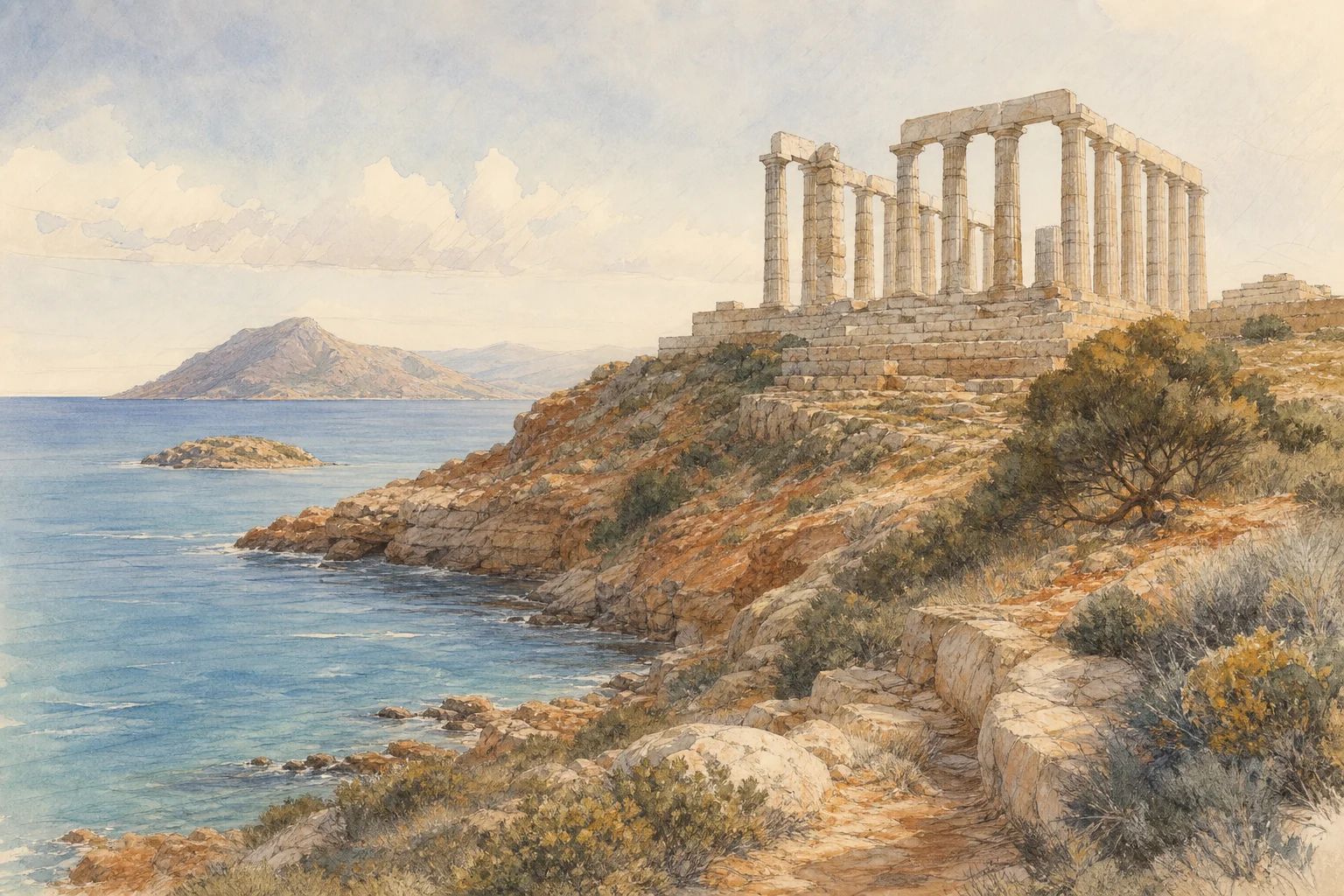
End beside the sea
The coast and Cape Sounion bring the peninsula’s geography into focus. Check official visitor information for access and seasonal opening times.
Official cultural-site ticket information ↗
More places and cultural context
Begin in Athens
Athens, a metropolis of the world, is the capital of Greece and a place rooted in glorious history. It is one of the oldest cities of the world, as evidenced by the plethora of its archeological sites.
The Parthenon, on the top of the “rock” of the Acropolis, the state-of-the-art Acropolis Museum, the Ancient Market (Agora) and the multitude of Hellenistic and Roman monuments in the historical center, make Attiki the center of attraction for millions of tourists every year. But, by travelling to every corner of the prefecture, you will experience the unique history of this region.
Museums & cultural life
Athens also hosts some of the most important Museums of the world. The Acropolis Museum houses the findings of the Acropolis of Athens, a strong attraction for millions of tourists. The National Archaeological Museum, the Museum of Greek Folk Art and Musical Instruments, the War Museum, the Benaki Museum, the Numismatic Museum, the Museum of Cycladic Art, the National Gallery, the Planetarium, the Foundation of Hellenic World and many more art galleries adorn the center of Athens. In fact, the whole city center is really an open-air museum that combines archeological treasures with modern cultural monuments.
The first Modern Olympic Games were held in the city of Athens in 1896. This lost tradition of Ancient Greece was reborn in the city, after almost 1500 years of being banned. This major international multi-sport event again returned to Athens for a second time in 2004.
Towards the coast
Leaving the urban landscape behind, no more than 10 miles from the center of Athens, the large coastline with beautiful beaches and crystal-clear, blue waters is another source of attraction for tourists. Traveling on local ferries will take you to the picturesque neighboring islands of the Saronic Gulf, an excuse for a weekend excursion both for Athenians and the city’s visitors.
Connections across Attica
The new international airport is the largest and busiest of Greece, serving its capital Athens and the region of Attiki. Southwest of the city center is the port of Piraeus, the largest passenger port in Greece. It is the getaway to the islands of Aegean Sea and Crete. It is a huge draw for cruise ships from around the world and serves also as a major commercial port. The port of Rafina and Lavrio also transport the local citizens and visitors to the many islands of the Aegean.
A very developed network of highways and roads connect the city of Athens with the rest of the prefecture. In this complex mosaic, you can find scattered vineyards in a close proximity to the city center. It is therefore easy for the visitor to access the archaeological treasures of Attiki, swim at nearby beaches, enjoy the natural settings the region offers, as well as tour the vineyards and wineries there. Everyone will be overwhelmed by the great hospitality, the millennia of tradition, the authenticity of local people and will drink heart-warming wines.
Plan transport before a wine tasting. Do not drink and drive.
