A culture written in the vine
History
Not a moment in time.
A thread through it.
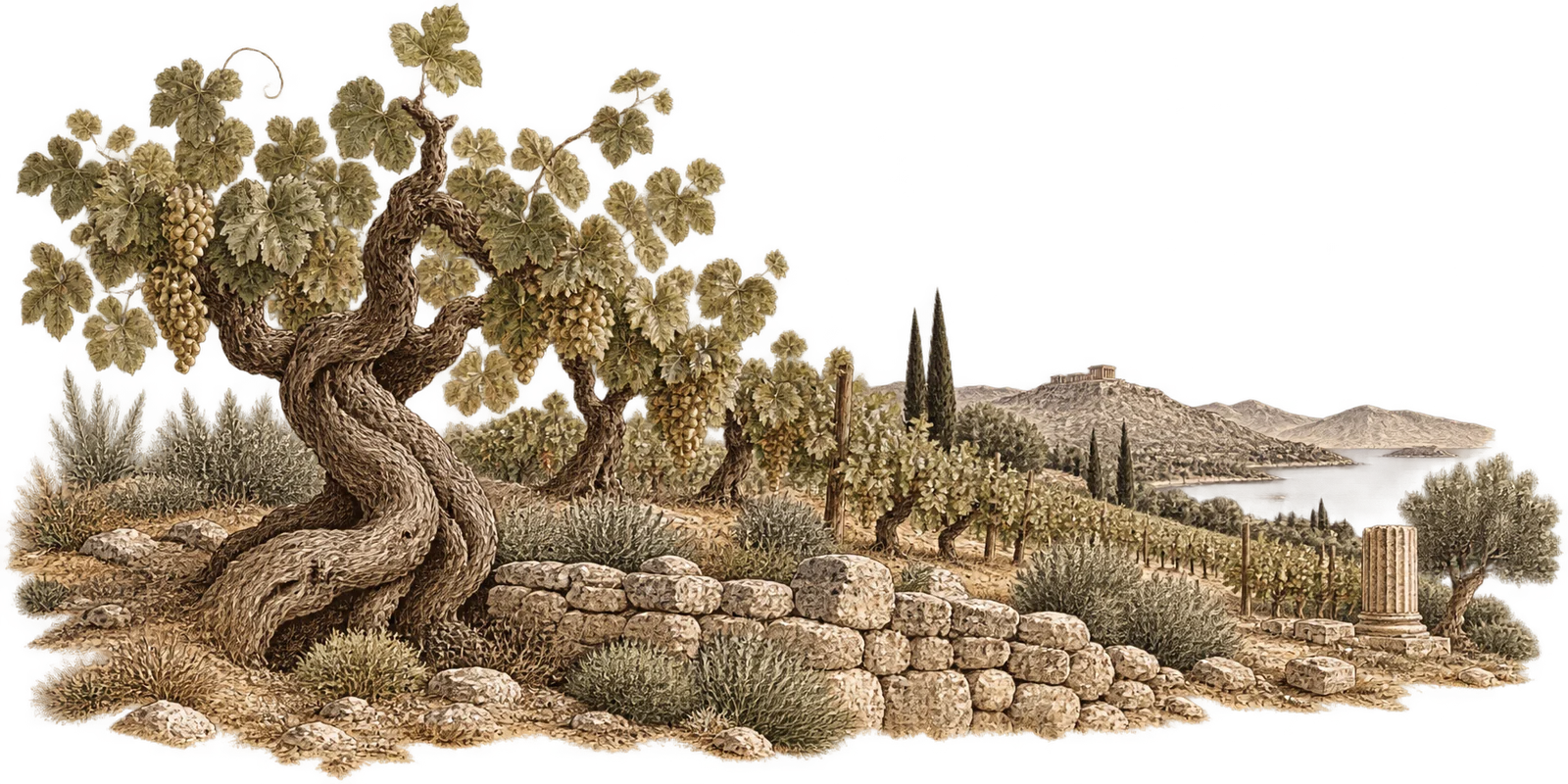
- ANTIQUITY
Wine enters the story.
The vine, the symposium and the cult of Dionysus connect wine with the social and cultural life of ancient Attica.
- CONTINUITY
A landscape of cultivation.
Across changing eras, winegrowing remained connected to local communities, their livelihoods and the table.
- THE CITY & ITS VINEYARD
Athens and Attica.
The expanding city and the surrounding vineyards developed a close relationship, with regional wine serving the life of the capital.
- CONTEMPORARY EXPRESSION
Tradition with a future.
Growers and winemakers explore local varieties, vineyard identity and diverse wine styles.
Enter the modern era
Read the historical account
The long view
The vineyard of Attiki has a long-standing winemaking history. Wine is thought to have been produced in the region since ancient times, and is considered to be among the oldest and most important vineyards in Europe. Wine has always held an important place in the religious and cultural life of the city of Athens, being connected with the social, economic, religious and artistic aspects of Greek life. Early in its history, the city of Athens developed strong commercial activity. Amphoras containing wine were sent all over the known ancient world, while kylix, kraters and other clay vessels, found in archeological excavations or shipwrecks, witness the city’s importance to wine-making.
Wine & the symposium
In ancient Greece, the “symposium” (meaning drink together) was part of a banquet that took place after the meal. Wine was at the center of these social events and drinking for pleasure was accompanied by music, dancing, recitals or conversation. It was a forum for men of respected families to debate, plot, boast, or simply revel with others. They were frequently held to celebrate social and family achievements such as victories in athletic and poetic contests. Some of the greatest ideals of philosophy and democracy were born through the “symposia” (plural for symposium) in important cities of the ancient world such as Athens, Elefsina, Megara and Marathon, all located in the Attiki prefecture. Many of the topics, often philosophical, discussed during symposia still represent some of the great ideals of the modern world.
The ancient Greeks loved wine and faithfully served its god, Dionysus. The visual images and symbols used in art work (iconography) of the Attic pottery prove the extent of the Dionysian worship. Legend has it that Dionysus, during one of his travels came to Attiki. Icarius was a man from Athens who welcomed the god Dionysus and was cordial to him. Dionysus gave the gift of vine and wine to Icarius as a reward for Icarius’ generous hospitality. Comedy and Drama were also born in Attiki through the worship of Dionysus.
A continuing wine culture
Following an uninterrupted history of 4 millenia in winemaking, the Attiki vineyard is still one of the most important, as well as the largest vineyard in Greece. Wine has always been and still is crucial to local people’s everyday life there.
