Mythology / the gift of the vine
The Attic myth
Between story and symbol
A god.
A gift.
A lasting story.
In Greek mythology, Dionysus is inseparable from wine. The Attic stories place the vine within a world of hospitality, celebration and transformation.
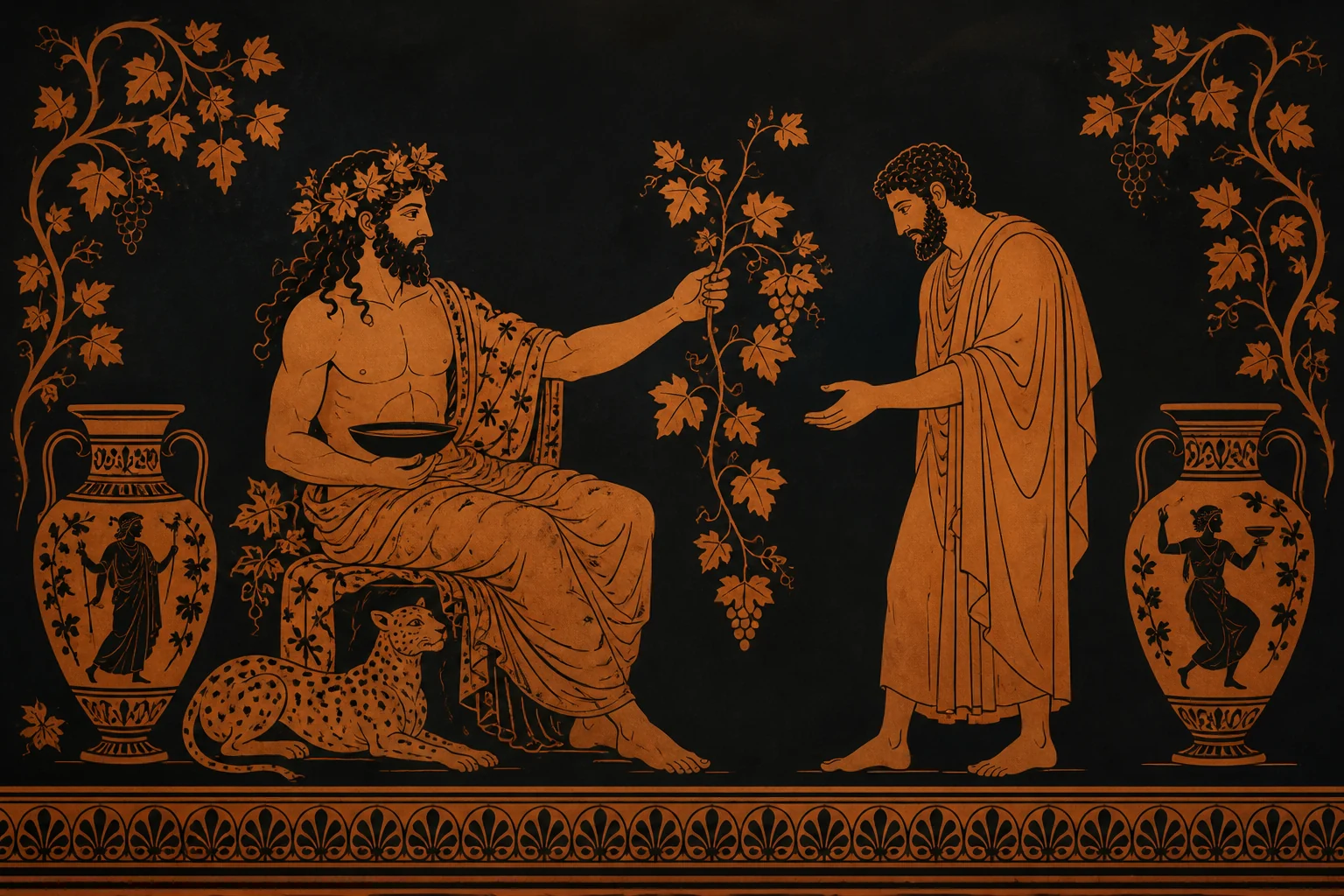
This chapter explores mythology and its cultural meaning, not a literal historical account. The artwork is an original interpretation, not an ancient artefact.
(As depicted by Stavroula Kourakou Dragona in her book: Vine and Wine in the Ancient Greek World).
The arrival of Dionysus
Almost two centuries before the reign of legendary Theseus, two new gods arrived in Attiki, Demeter and Dionysus, both chthonic gods of vegetation. Since then, cereals and vine have been cultivated in Attiki. Dionysus found hospitality from Icarius and his daughter Erigone on the north-eastern slopes of Penteli, in the largest municipality of Attiki, Icaria, near the area that today is called Dionysos. There, the god taught Icarius how to cultivate the vines and produce wine from their fruit. Dionysus instructed the king to plant vines in a semi-mountainous area, since he knew that vines, in order to produce good quality wine in dry, hot areas, needed to be grown on the cooler slopes. But there were pastures there.
The gift is shared
Icarius followed Dionysus’s advice to introduce others to the cultivation of the vine that yielded the divine drink. The vineyards were expanded and the pasture land decreased, but not without a negative impact on pasture land, angering the shepherds.
A tragic misunderstanding
According to the myth, the shepherds became intoxicated from the wine from Icarius’ wineskins and, thinking that he poisoned them, murdered him. The next morning, after the wine’s effects had gone, becoming terrified, they buried him in secret under a tree. Erigone, after wandering for several days, found her dead father, together with his faithful dog, Maira. Overcome by grief, she hanged herself from the branches of the tree.
Written in the stars
The Olympian gods felt sorry for all those who had perished unfairly and transformed them into bright stars: Erigone was transformed into Virgo, Icarius into Arcturus and the dog Maira into Sirius. However, Dionysus was not content only with punitive, he was also vengeful, so a god-sent hysteria overcame the inhabitants of Attiki, who began hanging themselves, en masse. The people of Attiki consulted the oracle at Delphi who advised that in order to purify themselves, they needed to punish the killers of Icarius and honor the deceased. Since then, it became a custom during harvest, winegrowers of Attiki would offer the first grapes to Icarius and Erigone.
The protagonists of this myth are depicted in the ancient theater of Dionysus, at the base of the Acropolis. The picture highlights the moment when the god gives Icarius a huge vine, while in the background of the scene the faithful dog Maira and his daughter Erigone are depicted.
