The base wine
Sound grapes and attentive winemaking come first. Resin is an aromatic ingredient, not a substitute for quality fruit.
The making of Retsina
Two ingredients.
One delicate balance.
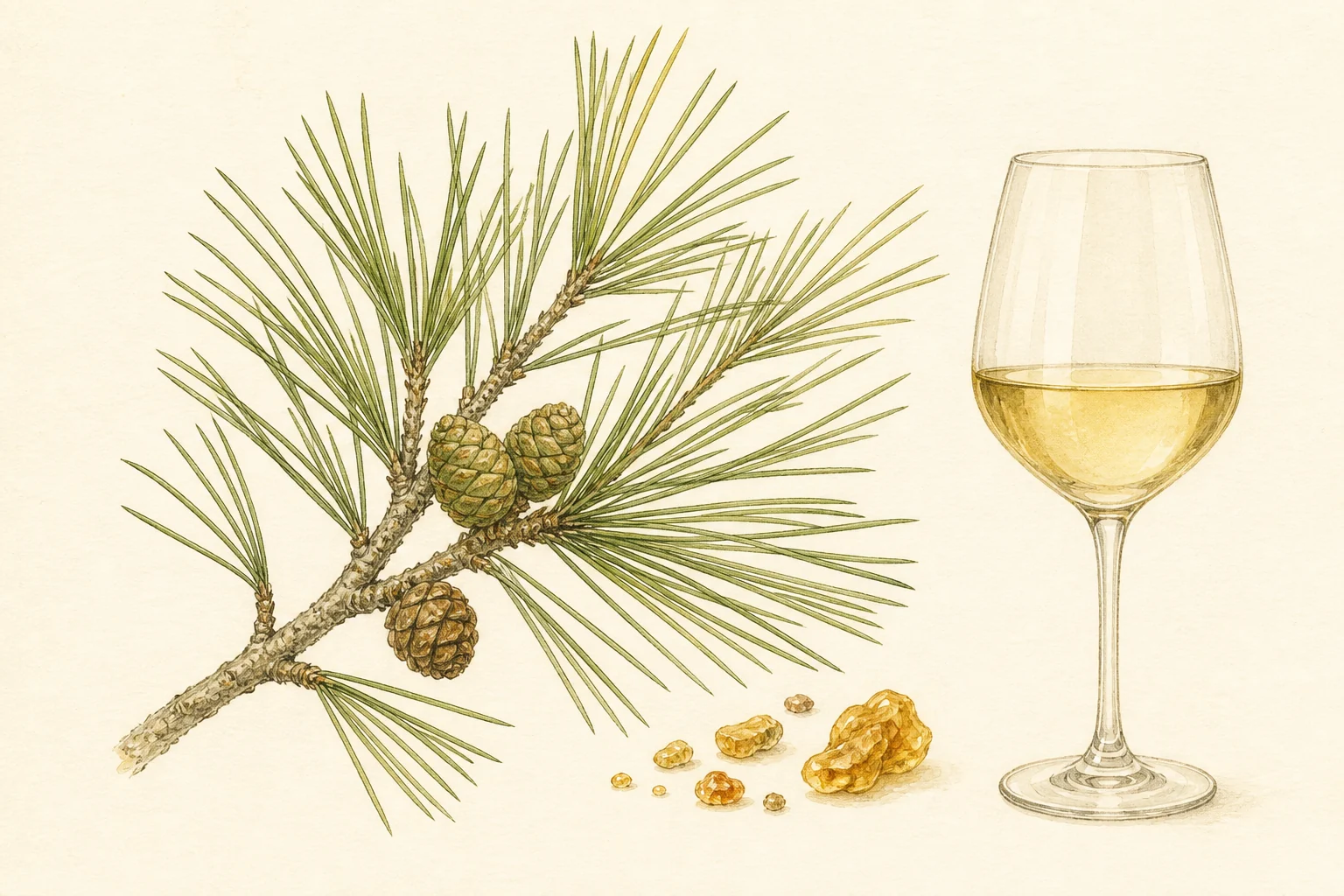
Sound grapes and attentive winemaking come first. Resin is an aromatic ingredient, not a substitute for quality fruit.
Aleppo pine resin is introduced before or during fermentation, according to the producer’s method and the applicable wine specification.
The contact between must, wine and resin develops the characteristic pine and herbal aromatic dimension.
The resin is removed. The finished wine should express both its grape character and the winemaker’s interpretation of the tradition.
The Protected Geographical indication PGI Retsina of Attiki (ΠΓΕ Ρετσίνα Αττικής) allows the production of white and rosé wines, with the latter consisting of only a minor portion of the total production. Savatiano and the pink-skinned Roditis are the only two varieties permitted within the PGI rules. The PGI boundaries include all the viticultural zones of the prefecture of Attiki.
Retsina is made by adding a special type of resin (of the Pinus Halepensis tree) before or during the fermentation of the must. (as long as no more than 1/3 of the original sugar content has been converted to alcohol). The total amount allowed has been reduced to a maximum of 1 kilogram per 100 liters of must. However, most of the quality-minded producers are adding significantly less for their new-age Retsinas. Two other extremely important factors to be taken under consideration are the duration and the temperature of the extraction. These factors will define the final aromatic profile of the wine.
Co-financed by the European Union and Greece
