Know the material
Aleppo pine resin carries the characteristic aromatic compounds associated with the tradition.
Material study / Pinus halepensis
01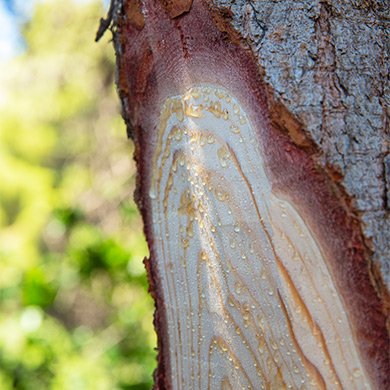
From the forest
The aromatic story of Retsina begins before the wine reaches the cellar.
Evolution of Retsina came with time. Winemakers experimented, changed or improved their production methods and this resulted in the new-age, fine-quality, Retsinas.
However, it’s not only the vineyard or winery that influences how a Retsina is made. Another very important factor is the quality of resin used. It’s not a secret that nowadays the wine in which the resin is added is of very good quality, but the quality of resin is also critical to producing a good Retsina. The resin should be fresh and recently collected from the pine trees of Attiki (of the species Pinus Halepensis). Attiki is considered
to be a great source of some of the best pine resin in Greece.
Harvesting the resin is tough work to do and that is why most of the producers either don’t do it anymore or do it as a side income. Harvest takes place between April and the beginning of October. An incision is made, and the bark is lifted away. As soon as the bark is lifted away, the wood is carved out and the sap that emerges is collected in containers that are placed on the trees.
About 1 kg or resin is harvested from each tree. It takes a few years for the bark to rejuvenate, that is why different trees are used each year for the collection of the resin.
Aleppo pine resin carries the characteristic aromatic compounds associated with the tradition.
Resin collection is skilled work, not a visitor activity. Tree health and responsible forestry practices matter.
In the winery, resin quality and the method of contact contribute to the final expression.
Co-financed by the European Union and Greece
