Let the fruit speak.
A neutral vessel, often chosen for temperature control and a clear expression of fruit.
- A useful question
- How was the wine fermented and matured?
Inside the winery
One harvest.
Many decisions.
The harvest sets the starting point: variety, ripeness, condition and intended style.
Yeast transforms grape sugars. Temperature, vessel and skin contact influence the result.
Time, lees contact and maturation choices shape texture before bottling.
The winemaker’s material library
Three familiar forms.
Different ways to explore the same harvest.
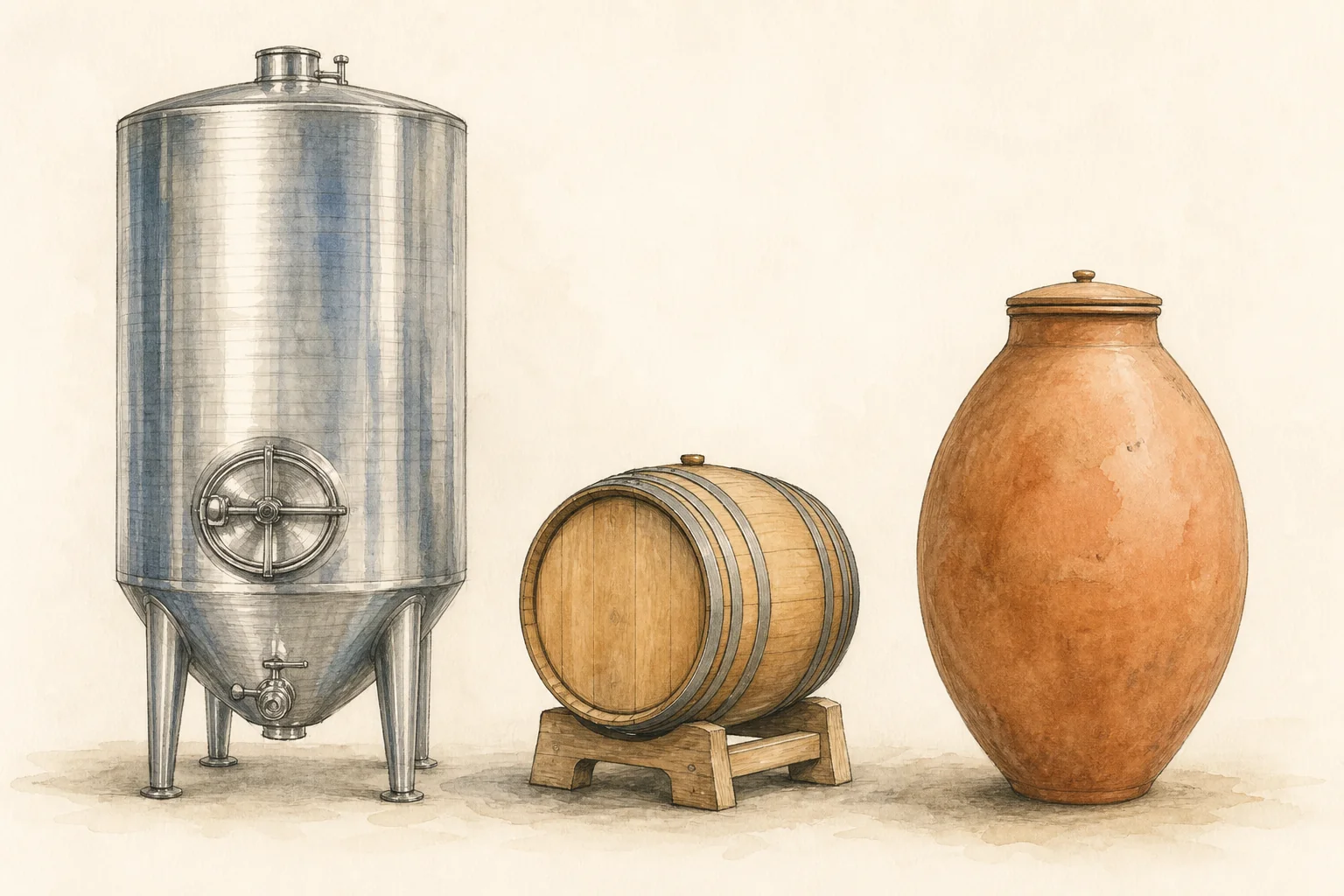
A neutral vessel, often chosen for temperature control and a clear expression of fruit.
The size and age of a barrel—and how it is used—shape its contribution to the wine.
Clay vessels offer another approach to fermentation and maturation. The producer’s method matters.
The full exploitation of Savatiano’s quality potential, the diversity of available terroirs, the “transformation” of Retsina, as well as the increasing number of dynamic wineries are driving the changes in the vineyard of Attiki.
The new generation of winemakers are making their mark by producing a fascinating array of styles, based on local grapes such as Savatiano and other indigenous and international varieties. It’s a fascinating blend of both tradition and innovation. Attiki today has a brand new identity on national
stage, widely acclaimed across Greece as the go-to-region for pure, lovely, well priced white wines. Ambitious producers are perfecting their styles and are keen to push the boundaries even further. They are pioneering modern viticulture, experimenting with different techniques, using alternative fermentation vessels, all while keeping an eye on their long-standing traditions. This powerhouse of winemaking talent has resulted in an inspiring range of new styles: Pet-Nats, use of skin contact, and low-intervention sulfite-free wines are just a few examples of the continuous research taking place in the winery.
Co-financed by the European Union and Greece
